
 Business License

Choosing the Right Cemented Carbide Rod for Your Application
Cemented carbide round rods look deceptively simple: a dense, grey, cylindrical blank. Yet behind that uniform appearance lies a carefully engineered balance of hardness, toughness, and wear resistance that determines whether a micro-drill survives ten thousand holes or fails on the first dozen. For engineers and toolmakers, selecting the correct grade is not a matter of picking the hardest option—it is a deliberate trade-off between cobalt content, grain size, and the specific demands of the job.
The Metallurgy Behind the Choice
All cemented carbide rods share the same basic architecture: tungsten carbide (WC) particles cemented together by a cobalt binder. The WC provides the hardness and wear resistance; the cobalt supplies the toughness that prevents chipping under load. The ratio between them is the first decision point. A grade like YG6, with roughly 6% cobalt, delivers high hardness (around HRA 90.5) and excellent wear resistance, making it suitable for finishing operations and hard materials . Increase the cobalt to 10–15%, as in YL10.2 or YG15, and hardness drops slightly while toughness rises sharply—a necessary compromise for interrupted cuts, rough machining, or applications where shock loading is unavoidable .
Grain size adds another layer of control. Submicron and ultrafine grades, with WC grains measured in fractions of a micron, achieve a rare combination of high hardness and respectable transverse rupture strength. These are the grades of choice for PCB micro-drills, where hole diameters can fall below 0.3 mm and any deviation means scrap . Coarser grain structures, by contrast, offer better resistance to thermal cracking in heavy-duty stamping or mining applications.
From Blank to Tool: Where These Rods Go
The most familiar destination for carbide rods is the cutting tool bin. Twist drills, end mills, reamers, and burrs all begin as cylindrical blanks that are ground, fluted, and coated . The electronics industry consumes enormous quantities of ultrafine-grain rod for PCB drilling, where the demand for positional accuracy and surface finish is relentless. A single drilling cell can wear through hundreds of micro-drills per shift, and each one must perform identically .
Beyond cutting tools, carbide rods serve in wear parts where abrasion would destroy hardened steel. Guide pins, punch heads, core rods for injection molds, and sealing components in pumps all benefit from carbide's resistance to galling and dimensional drift . The medical field uses fine-diameter rods for dental drills and surgical burrs, where a sharp edge must be maintained through repeated sterilization cycles. In oil and gas exploration, thicker rods become drill bits and downhole wear components that endure abrasive slurries and high impact loads .
A Practical Selection Framework
When specifying a rod grade, start with the workpiece and the failure mode. If the tool fails by gradual flank wear, lean toward a harder, lower-cobalt grade—YG6X or a K10-class material. If the failure is chipping or breakage, especially in interrupted cuts or on older equipment with spindle play, a tougher grade like YG8 or YL10.2 will usually pay for itself in reduced downtime, even if the theoretical tool life is shorter . For PCB micro-drilling, the choice is almost always an ultrafine grade with 6–8% cobalt, optimized for edge sharpness rather than bulk toughness .
It is also worth remembering that carbide is brittle in tension and sensitive to thermal shock. A rod that performs flawlessly in a controlled grinding cell may fail prematurely if brazed without proper preheating or if coolant is interrupted during heavy cutting. Grade selection cannot compensate for poor toolholding or abusive machining practice.
For buyers sourcing rods in volume, the grade designation on a certificate matters less than the consistency behind it. Cobalt content within a batch, grain size distribution, and pressing density all influence how a rod behaves after grinding. A supplier who can hold these variables tight is worth more than one who offers the widest catalogue. In a material where a fraction of a percent of cobalt can shift hardness by a full point on the HRA scale, consistency is not a luxury—it is the specification.
Recently Posted
-
Why "One Piece" Is the Future of Custom Tungsten Carbide Wear Parts
October 30, 2026In the world of industrial manufacturing, the phrase "minimum order quantity" (MOQ) has long been a source of frustratio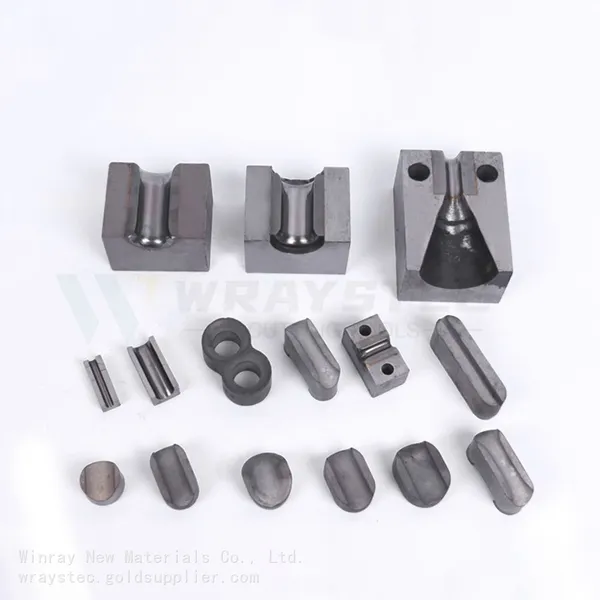 Read More
-
Cemented Carbide Wolf Tooth Rod (YD-Type Hardfacing Rod)
October 30, 2026In the field of industrial wear protection, the "Cemented Carbide Wolf Tooth Rod" does not refer to a physical striking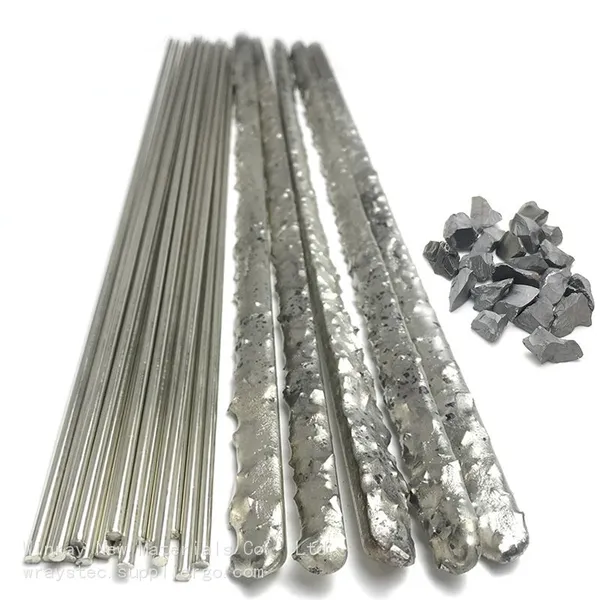 Read More
-
Why "One Piece Minimum" Is the Most Underrated Advantage in Carbide Machining
October 30, 2026If you've ever tried to source custom tungsten carbide components, you've probably run into the same wall: minimum order q Read More
-
The Unseen Edge: Why Cemented Carbide Skiving Knives Rule Modern Metalworking
October 29, 2026In the vast ecosystem of industrial cutting tools, few are as misunderstood or as quietly indispensable as the cemented carbide sk Read More

Contact Us
Recommended Products
-
 EDM Wire-Cut Carbide Base Strip, 150mm x 20mm x 3mm, 89.5 HRA, Ra 0.6μm, Parallelism 0.01mmUS$ 1.55MOQ: 10 Units
-
Unmounted Carbide Substrate Blank, 305mm x 305mm x 2.0mm, 90.0 HRA, Micro-Grain WC-Co 10% Co CompositionUS$ 1.55MOQ: 10 Units
-
Carbide Substrate With 12-Month Warranty, Mill Test Report Included, 90.0 HRA, CNC Ground, Sizes Tailored to BlueprintUS$ 1.55MOQ: 10 Units
-
Cemented Carbide Substrate WC-Co Grade 6.0% Co, 90.5 HRA Hardness, 10mm x 10mm x 3.2mm Ground Tolerance ±0.05mmUS$ 1.55MOQ: 10 Units
-
Carbide Base Plate for Precision Mold Manufacturing, 5mm Thick, 60 x 60mm, 0.005mm Perpendicularity, Corrosion-Resistant GradeUS$ 1.55MOQ: 10 Units
-
YG8 Grade Carbide Saw Tips 25x5x1.5mm Tungsten Carbide Blade Inserts Hardness 1560HV for Sawmill UseNegotiableMOQ: 10 Kilograms
-
Slot Style Carbide Saw Tips Tungsten Alloy Hardness 90HRA Grind Tolerance ±0.02mm for Auto Sharpening MachinesNegotiableMOQ: 10 Kilograms
-
Mill Test Report Provided Carbide Saw Tips YG8 12-Month Warranty Against Edge Chipping for Wholesale BuyersNegotiableMOQ: 10 Kilograms
-
Carbide Saw Tips for MDF and Plywood Processing YG6X Tungsten Carbide Fine-Grain Grade for Panel Plant Saw BladesNegotiableMOQ: 10 Kilograms
-
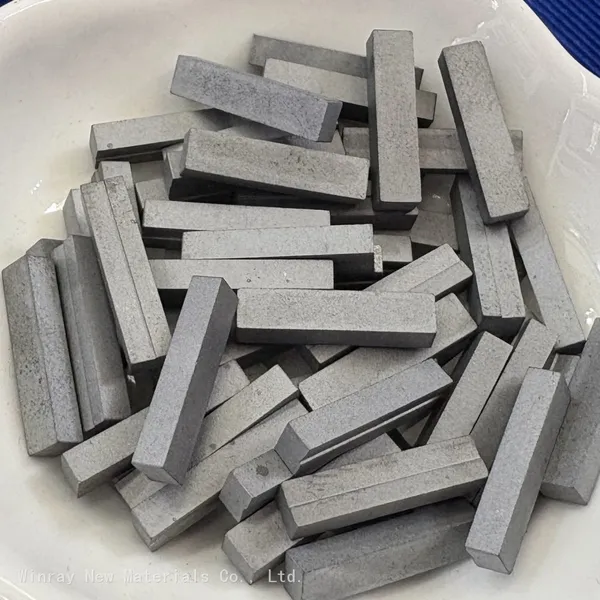
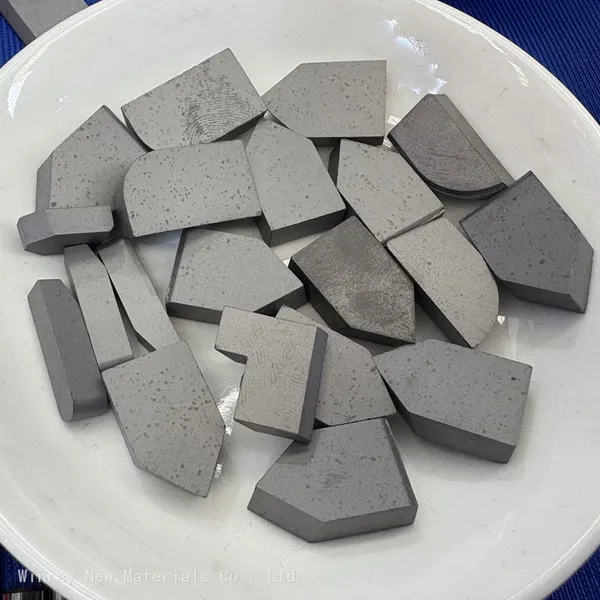
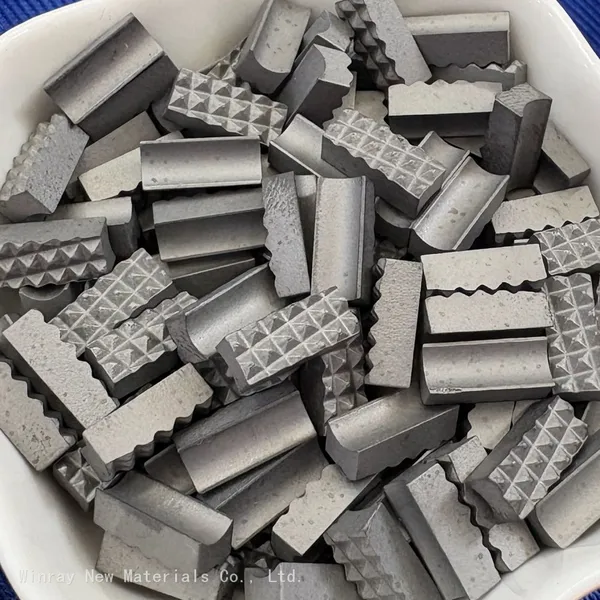
Flat Top Carbide Saw Tips 30x8x3mm With 5 Degree Clearance Angle Tungsten Carbide Inserts for Scoring BladesNegotiableMOQ: 10 Kilograms
-
Carbide Saw Tips 12 Degree Clearance Angle WC-Co Density 14.8 G/cm3 Standard Compliant for Hardwood Cutting BladesNegotiableMOQ: 10 Kilograms
-
K20 Tungsten Carbide Saw Tips WC-Co Micro-Grain 0.8μm 1800HV for TCT Circular Saw Blade Re-tippingNegotiableMOQ: 10 Kilograms
-
Carbide Saw Tips With Grinding Technical Support 24-Month Warranty OEM Dimension Customization ServiceNegotiableMOQ: 10 Kilograms
-
Shear Cut Carbide Saw Tips 1.5mm Thickness 88-92HRA Silver Brazing Grade for Industrial Saw Blade ManufactureNegotiableMOQ: 10 Kilograms
-
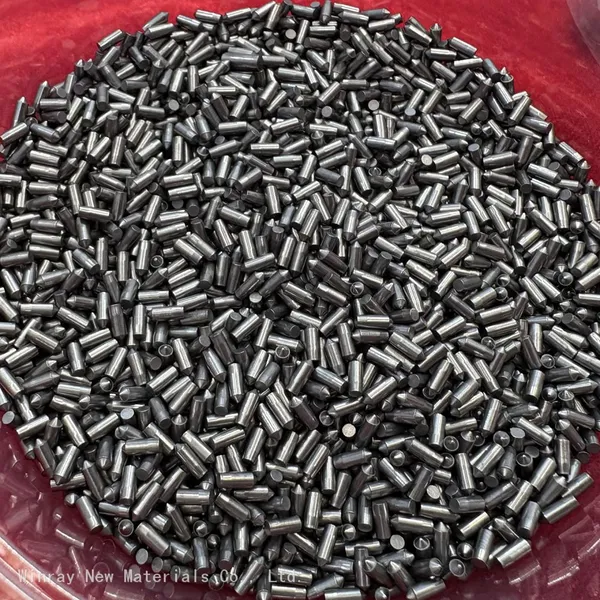
Sintered Carbide Wear Plates With 2500 MPa Transverse Rupture Strength for Heavy Industrial EquipmentNegotiableMOQ: 1 Piece
-
Carbide Wear Parts for Mining Excavator Bucket Teeth and Crusher Hammer Tips - 350 MPa Impact ToughnessNegotiableMOQ: 1 Piece
-
Carbide Wear Parts for Cement Plant Vertical Mill Roller and Coal Mill Grinding Table Repair - 800°C ResistantNegotiableMOQ: 1 Piece
-
Tungsten Carbide Wear Parts With Mill Test Report and 12-Month Warranty for Industrial ReplacementNegotiableMOQ: 1 Piece
-
Tungsten Carbide Wear Parts for Mining Machinery - WC-Co Grade YG8, Hardness 89.5 HRA, ±0.01mm ToleranceNegotiableMOQ: 1 Piece
-
Custom Tungsten Carbide Wear Strips - 85-92 HRA Hardness, Operating Temperature up to 800°CNegotiableMOQ: 1 Piece